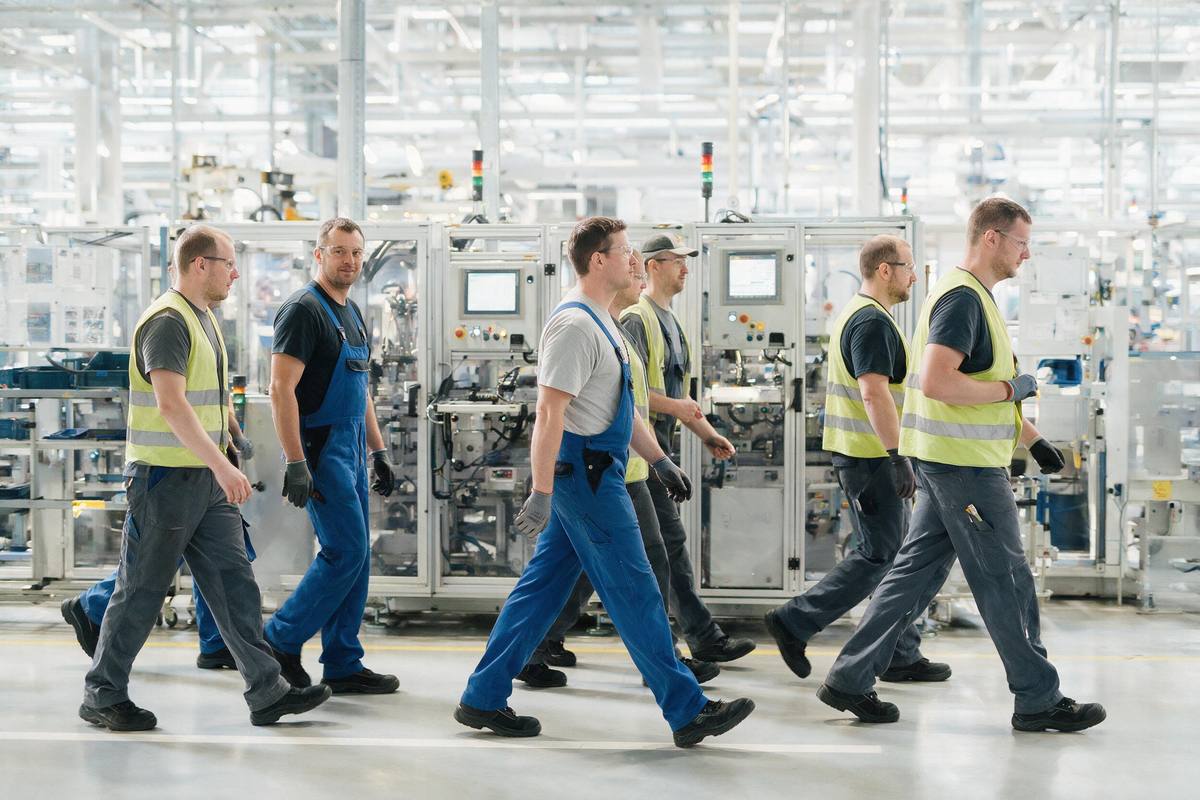
Slovakia turned itself into the world's most car-intensive economy - more vehicles per head than anywhere - and spent its workforce doing it. Factories, warehouses and the service sector now compete for the same people, Vienna skims the west, and the spare capacity sits five hours east of where the jobs are. Hiring in Slovakia is logistics as much as recruitment.
- Slovakia builds more cars per capita than any country on earth - and its factories, logistics and services compete for the same finite workforce.
- Bratislava is effectively an extension of Vienna's labour market; the east has the spare capacity the west lacks.
- Statutory surcharges for nights, weekends and holidays are significant and defined by law - price them into offers and ads.
- Ukrainian and Balkan workers plus a growing Asian channel fill the structural gap, mostly through agencies.
A market split down the middle
Western Slovakia - Bratislava, Trnava, Nitra, Zilina - is automotive country at full employment, where every hire is a switcher and Austrian commuting sets the reference wage for anyone near the border. The east has Slovakia's remaining labour reserve and lower costs, which keeps attracting investment but also means the good candidates there field multiple offers too. Employers bridge the gap the traditional ways: company buses, workers' housing, relocation payments - and increasingly by placing work east instead of moving people west.

Pay: base, surcharges and the net lens
The minimum wage rises annually by formula or agreement, and the once-complex system of higher minimums by job difficulty has been simplified in recent reforms - but the statutory surcharges for nights, weekends and holidays remain the big lever in shift-heavy sectors, adding meaningfully to take-home pay. Slovak candidates compare net monthly income including surcharges and the 13th-salary-style bonuses many manufacturers pay; ads that state that full expected net outperform base-rate ads decisively - the concrete-numbers rule from our job ad examples in its Slovak form.
Foreign workers and the agency layer
- Ukrainians form the established core of foreign labour, expanded under protection schemes since 2022.
- Balkan and Asian workers arrive through the seasonal and national-visa routes, nearly always via licensed temporary agencies.
- Agencies staff a large share of industry - the Czech pattern repeats: agency flexibility for peaks, direct hiring for the core you want to keep, per hiring in Czechia.
- Paper first: registration and permits before day one; inspections in industrial zones are routine.
Where do Slovak candidates look?
Profesia.sk is the dominant board by far and a household name; Kariera and classifieds fill the edges. Frontline attention, as across the region, lives heavily in Facebook groups - regional and factory-town groups are active hiring floors - with Instagram carrying Bratislava services and TikTok the youngest workers. Referrals run deep in factory towns; pay for them formally. And the commuter recall play applies here as in Hungary: the feed is the only channel that reaches a Slovak working in Austria with a reason to come home.
The takeaway
Slovakia is a full-employment industrial economy with a geographic twist: the people and the jobs are at opposite ends of the country. Win with full-net honesty in ads, surcharges priced and stated, transport or housing where geography demands it, and an agency-plus-direct mix for the structural gap - and remember that in a market this tight, keeping a trained operator is the cheapest hire you will ever make.
Hiring in Slovakia?
Qwiza runs your campaign in Slovak and the languages of your workforce, screens shift availability up front, and returns ranked candidates - 48-hour pilot target.
See how Qwiza worksFrequently asked questions
What surcharges must I pay for shift work in Slovakia?
The Labour Code defines mandatory percentage surcharges - tied to the minimum wage - for night work, Saturdays, Sundays and public holidays, plus overtime premiums. For a three-shift factory or weekend-heavy service operation these materially change labour cost and take-home pay, so quote them in ads: "base plus surcharges, typical monthly net X" is how competitive Slovak employers advertise shift roles honestly.
Where is there actually available labour in Slovakia?
Eastward. The west - Bratislava and the automotive corridors - runs at effectively full employment, with Austria absorbing commuters on top. Eastern regions around Kosice and Presov carry higher unemployment and real available workers, which is why plants, shared-service centres and now employers of remote-capable roles keep moving east, and why offering transport or housing westward remains a standard recruiting play.
How does probation work?
Up to three months for ordinary roles (six for managerial), with termination possible during it for any reason or none, given written notice. Fixed-term contracts are limited to two years with restricted renewals. Standard central-European toolkit - the market, not the code, is the binding constraint.