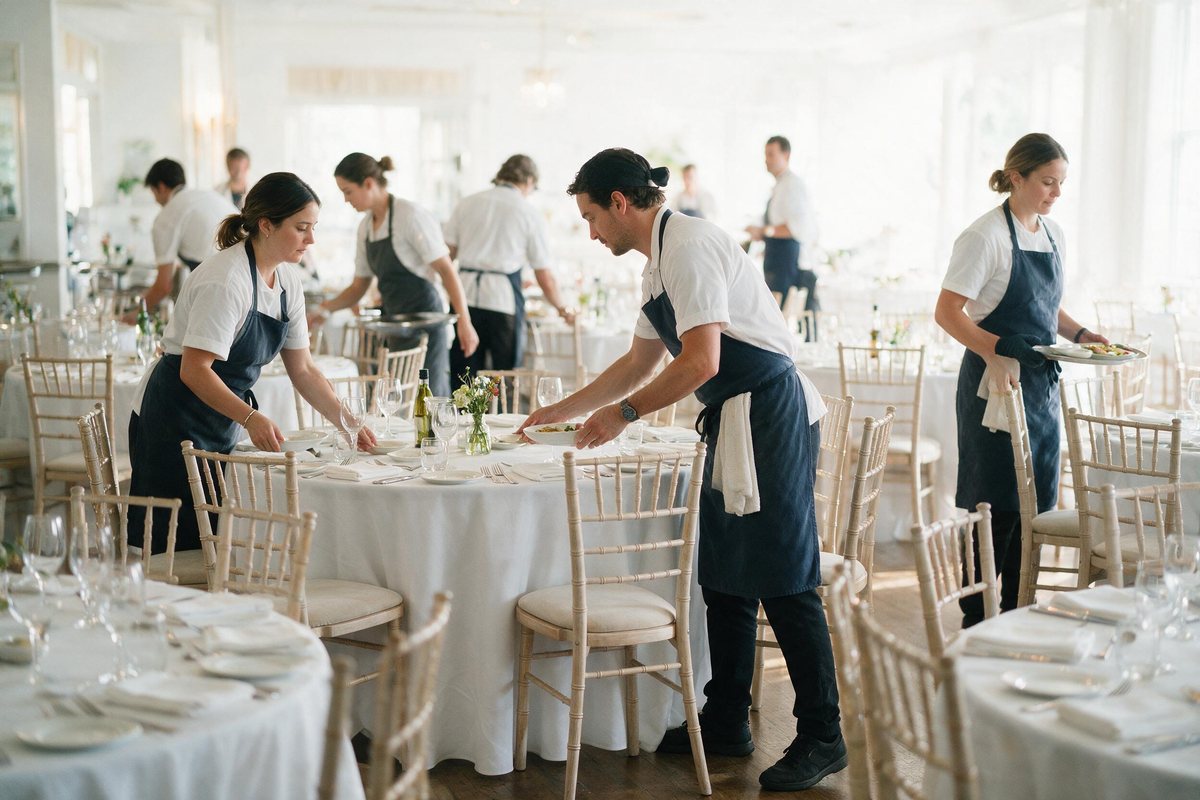
Event catering hires a workforce that evaporates every Sunday night. The naive version rebuys fifty strangers weekly and prays; the professional version owns a pool - two hundred vetted, tiered, message-responsive people from which any Saturday's army assembles in an afternoon. The difference is a system, and it is buildable in a season.
- Event staffing is pool management, not vacancy filling: the asset is a bench of vetted people who answer messages.
- No-shows are the industry's tax - beat them with overbooking maths, reliability tiers and confirmation sequences, not hope.
- One-shift workers become regulars where pay is same-week, briefings are respectful and shifts are offered fairly.
- Screen once, properly, at pool entry - then every event is a message, not a recruitment.
Build the pool once, use it forever
Pool entry is where screening happens: a two-minute scored application - availability patterns, experience (banquet service, bar, kitchen support), transport, languages - plus one short paid trial event with a checklist score, per trial shifts. After that, staffing an event is a broadcast to matching, available, tiered members with one-tap accept - no interviews, no readvertising. The pool refills continuously from feed campaigns aimed at the natural constituencies: students, per student hiring, hospitality moonlighters, and returners who did last wedding season - your version of returning seasonal workers.

The reliability machine
- Tiers with teeth: new, proven, core - core gets first pick of premium events and guaranteed monthly hours; silent no-shows demote a tier automatically.
- The confirmation cascade: booking confirm, 48-hour reminder, morning-before final tap - on the channel people actually read, per WhatsApp recruiting.
- Same-week pay: nothing predicts casual-workforce loyalty like money that arrives while the shift is remembered.
- Overbooking arithmetic: plus-10-to-15 per cent on big nights plus a paid standby pair - insurance priced off your measured no-show rate.
Briefing fifty people who have never met
Event quality dies in the gap between hired and briefed. The fix is a one-page event brief sent the day before - venue pin, arrival time, dress, menu highlights, service style, the shift lead's name and photo - and a fifteen-minute stand-up on site that assigns stations and pairs rookies with core-tier veterans. Laminated station cards do the rest. It is onboarding compressed to hours, and it is why two agencies with identical pools deliver unrecognisably different service.
The takeaway
Stop hiring for events; hire into a pool. Screen once at the door, tier by demonstrated reliability, pay fast, confirm in cascades, brief on one page - and Saturday's army assembles by message while your competitors are still posting ads on Wednesday.
A bench that answers.
Qwiza builds and screens your event pool - availability, experience, reliability signals - and fills Saturday's roster with ranked, confirmed people. 48-hour pilot target.
See how Qwiza worksFrequently asked questions
How much should I overbook for an event?
Track your own no-show rate and book to it - the industry runs anywhere from 5 to 25 per cent depending on pool quality and pay speed. A disciplined operation books plus-10 to plus-15 per cent for large events, holds a paid standby tier (two hours' pay to stay reachable until 16:00), and watches the rate fall as reliability tiers and same-week pay do their work. Guessing is not a system.
How do I stop event staff no-showing?
Structurally: confirmation at booking, reminder 48 hours out, final confirm the morning before with one-tap rebook - the sequence that moves every no-show number. Economically: same-week pay (the single biggest lever in casual work), reliability tiers where showing up unlocks first pick of the best-paid events, and a real cost to silent flaking - tier demotion, not moral lectures. People flake on strangers holding vague promises; they show for systems that visibly reward showing.
Employees or freelancers for event work?
Depends on jurisdiction and pattern: regular casual employment (zero-hours or its local equivalent, used honestly), mini-jobs and student contracts where they exist, and agency supply for overflow are the standard stack. What breaks legally is treating de facto scheduled regulars as freelancers - the misclassification line the platform work directive is redrawing. Get the local model right once with an accountant, then scale it.