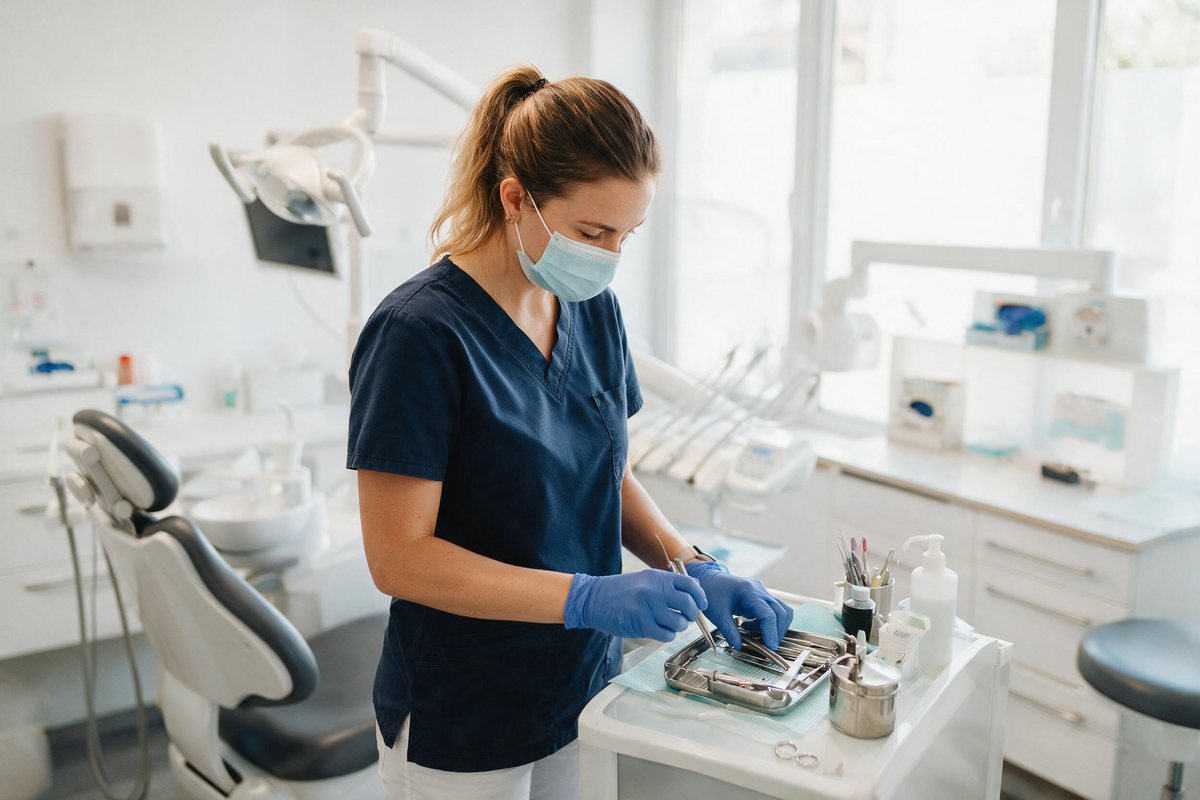
Dentistry's staffing maths is brutally legible: a chair without an assistant produces nothing, a dentist doing assistant work produces at a fraction of their licence, and a front desk that books badly idles the most expensive square metres in the building. The shortage of certified assistants and hygienists is real across Europe - but the practices that thrive treat it as a training problem and a design problem, not a waiting problem.
- Chair-time economics rule: every unstaffed assistant role idles a revenue-producing chair and a dentist's licensed hours.
- Hygienists are the scarcest licence - recruit on schedule design and clinical respect, because everyone pays similarly.
- The scalable answer is training assistants from the general pool - precision, calm and care are screenable; the rest is teachable.
- Small-team chemistry is the retention variable: one toxic hire in a four-person practice is a staffing crisis.
The assistant pipeline you control
Certified assistants are scarce; trainable people are not. The screenable core of the job - fine motor precision, calm around anxious patients and sharp instruments, sterilisation discipline, punctuality that never wavers - lives in people currently steaming milk and managing shops, and a structured funnel finds them: scored scenario questions, a paid working-interview morning shadowing chairside, then certification funded against a fair stay-period, per the upskilling playbook. Practices running one trainee at all times convert the sector's shortage into their own pipeline - the same move as bakeries and butchers facing their thinning trades.
Screening for a small clinical team
- Precision and protocol: scenario questions on the contaminated tray and the interrupted sterilisation cycle - hygiene temperament is measurable before day one.
- Patient calm: the phobic patient gripping the armrest - what do you say? Warmth under clinical conditions is the trade's real skill.
- Team chemistry: in a four-person practice, the working-interview morning doubles as a mutual chemistry test - weight it accordingly, per trial shifts.
- Reliability above all: one absent assistant cancels a day's book; screen the commute, the backup plans, the track record.
Keeping a team of four
Small-practice retention is chemistry plus fairness at close range: pay reviewed against the local market annually (your assistant hears exactly what the practice across town pays), training funded visibly, the rota's late evenings shared including by the principal, and conflicts addressed in days - in a team this size, one festering issue is a resignation letter incubating. The turnover levers apply with amplified stakes: replacing one person here is a quarter of the workforce.
The takeaway
Staff the chairs by manufacturing your own assistants from the careful-hands pool, recruit hygienists with schedule design and stated appointment lengths, hire the front desk as the revenue role it is, and manage the small team like the fragile high-value system it is. The empty chair is optional.
Chairs staffed, book full?
Qwiza screens for what dental support needs - precision, calm, reliability - and returns ranked local candidates ready to train. 48-hour pilot target.
See how Qwiza worksFrequently asked questions
Where do I find dental assistants when none apply?
Mostly by making them: in many countries dental assisting is learnable on the job plus certificate courses, which opens the whole careful-hands general pool - hospitality and retail workers seeking structure, healthcare-curious career changers, returners. Screen for the trainable core (manual precision, calm under sharp instruments and sharper patients, hygiene discipline, reliability) with scenario questions and a working-interview morning, then fund the certification with a fair stay-period. Practices that run this pipeline continuously stop experiencing the shortage.
How do I recruit a hygienist in this market?
With design, not just money: hygienists everywhere report the same wish-list - their own column run sanely (realistic appointment lengths), clinical autonomy within scope, modern equipment, and no assembly-line scheduling. Practices offering four-day weeks, guaranteed lunch breaks and respect for the licence recruit from practices offering none of that at similar pay. State the appointment length in the ad; hygienists read it as the truth about your practice.
What should I screen for at the dental front desk?
Revenue skills wearing a receptionist's badge: schedule optimisation (the difference between 85 and 98 per cent chair utilisation is this person), calm triage of dental-pain calls, payment conversations handled with grace, and recall-list discipline that keeps the book full. Screen with situational questions - the double-booked emergency, the anxious no-show repeat offender - and pay above generic reception rates, because this desk directly runs your revenue engine.