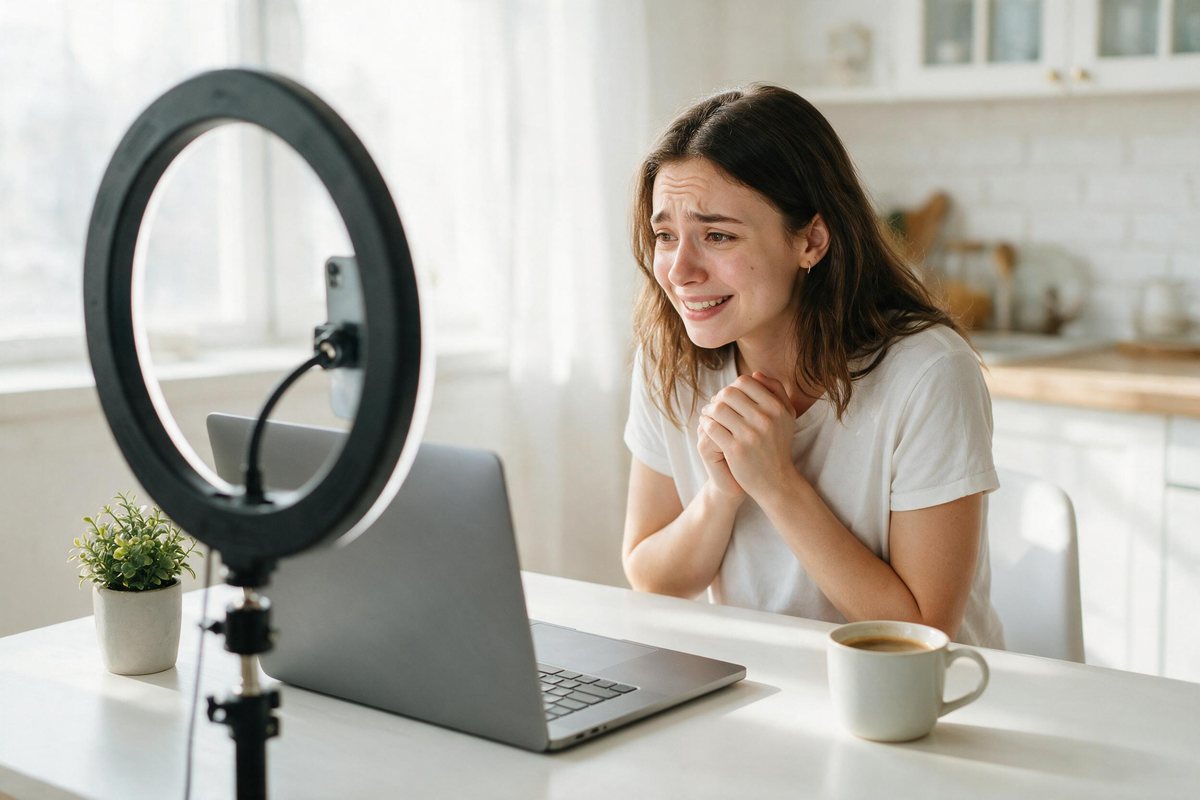
On paper, one-way video interviews solve a real problem: you cannot speak to two hundred applicants, so let each record answers alone and watch them at speed. In practice they solve it the way a tollbooth solves traffic - by making a large share of people turn around.
- Recording yourself alone for an unseen judge is high-friction and high-anxiety - and drop-off shows it.
- Video rewards on-camera confidence, which is not the job for most roles - and invites bias back in.
- The narrow fit: roles where presenting to camera IS the work, late in the funnel, with a human watching.
- For volume screening, constrained questions with scoring beat video on completion, fairness and signal.
Why do candidates drop off so hard?
Because the ask is enormous and the respect is zero. Find a quiet room, look presentable, perform to a lens with no human reaction, on a deadline, knowing a stranger may skim four seconds of it - for a job that pays by the hour. Employers see the result in their funnels: a big share of applicants simply never record, and the loss is not random.
- Employed candidates - your best ones - drop out first, because they have alternatives and no privacy at work.
- Non-native speakers and reserved personalities underperform on camera relative to on the job.
- Parents and shift workers lack the quiet hour the format silently assumes.
- And bias walks back in through face, accent, age and living-room decor - everything blind screening works to remove is on screen in the first frame.
What does video actually measure?
Comfort performing to a camera. For a spokesperson, a salesperson on video calls, an on-air host - that IS the job, and the format is a legitimate work sample. For a warehouse associate, a nurse or a backend engineer it measures a skill the role never uses, and ranks candidates by it anyway.
When do async videos genuinely fit?
- The job is on camera - then it is a work sample, use it.
- Late funnel, few candidates - as an optional convenience alternative to a live call, not a gate for hundreds.
- With disclosed, human review - candidates told who watches and when, and no algorithmic face-and-voice scoring, which is scientifically shaky and in some markets legally radioactive.
What screens better for volume?
Something proportionate: two minutes, on a phone, no performance anxiety, scored on substance. Constrained situational questions with a couple of open answers capture judgement and experience without demanding theatre - and completion rates stay high because the effort matches the stage. That is the model we detail in the quiz screening guide, with timing as an honest extra signal rather than stage presence.
Then spend the saved goodwill where conversation genuinely helps: a short live call with the top five, booked by the candidate into real calendar slots. Humans at the human stage, structure at the volume stage.
The takeaway
Match friction to funnel stage. A camera performance demanded of two hundred strangers costs you your best applicants and imports bias; a two-minute structured quiz plus live conversations for finalists gets more signal from more people with less resentment.
Qwiza is the volume half of that equation done properly - and its booking links handle the human half.
Losing applicants at the video stage?
Qwiza screens with a two-minute scored quiz candidates actually finish, then lets your shortlist book real conversations - 48-hour pilot target.
See how Qwiza worksFrequently asked questions
How much drop-off do one-way video interviews cause?
Reported completion varies widely, but practitioner data consistently shows a large minority - often more - of applicants never record, and the loss skews toward employed candidates, non-native speakers and people without private quiet space. The decline is selective, which is worse than merely large.
Is AI scoring of video interviews reliable?
Automated analysis of face, voice and word choice has weak scientific support and serious bias exposure, and regulators in several markets treat it as high-risk. If you use async video at all, have disclosed human review and score against structured criteria.
What should small employers use instead of video screening?
A short structured application: situational questions with predefined scoring, one or two open answers, finishable on a phone in about two minutes. It keeps completion high, screens on substance rather than stage presence, and leaves live conversation for the shortlist, where it belongs.