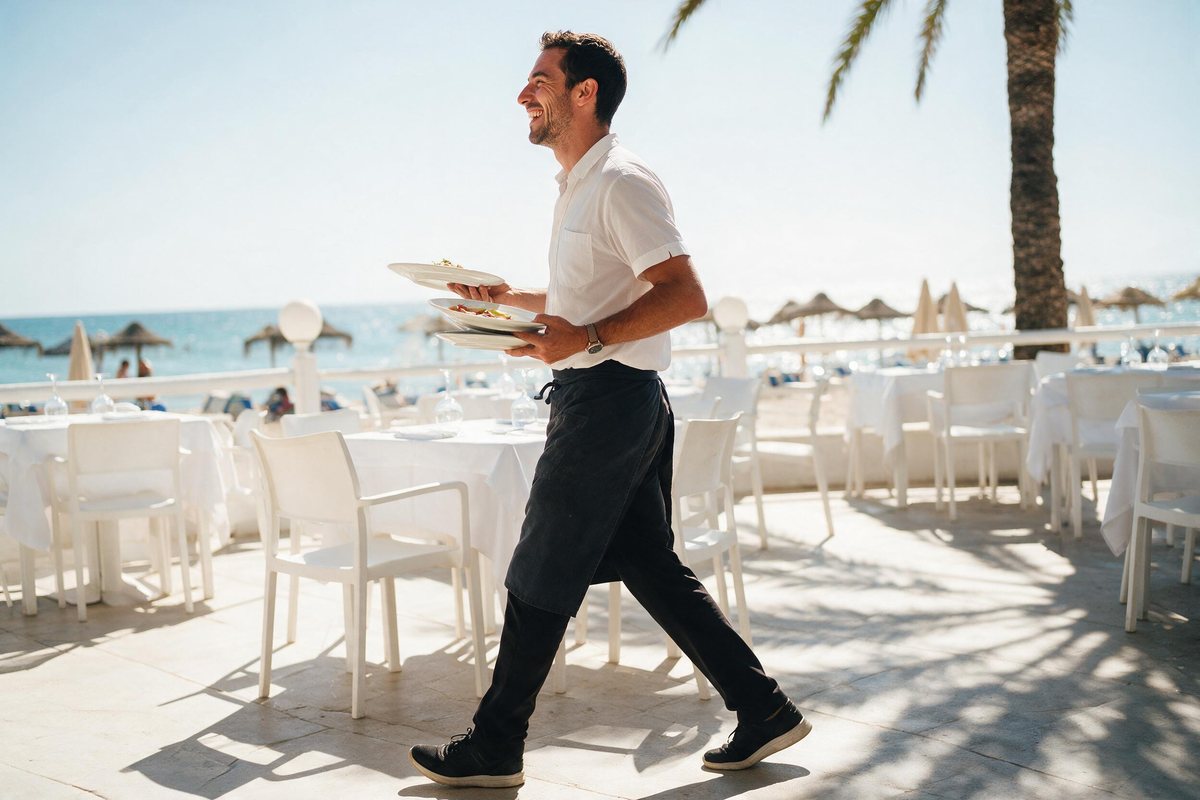
Spain confuses employers who read statistics. On paper, unemployment is among Europe's highest; on the ground, coastal restaurants cap covers because they cannot staff the terrace and construction firms turn down work. Both facts are true, and hiring well in Spain means understanding why they coexist: geography, skills mismatch, and a large share of the willing workforce already absorbed.
- Spain's paradox is real: headline unemployment and unfillable hospitality vacancies coexist.
- The contract reform pushed everything toward permanent forms - including the fijo discontinuo for seasonal work.
- Registration before the first shift is mandatory and enforced; informality is a liability, not a convenience.
- Candidates live on Instagram and WhatsApp; official channels reach the unemployed, not the employed.
What did the labour reform change?
Spain's landmark reform sharply restricted temporary contracts, which had dominated the market for decades. The system now pushes employment toward permanent forms - including the fijo discontinuo, a permanent contract for recurring seasonal work under which workers are called up each season and retain their relationship with the employer between seasons.
- Fijo discontinuo is now the standard vehicle for tourism seasonality - build your seasonal model around it rather than around expired temporary forms.
- Registration with social security before work begins is mandatory and actively inspected, particularly in hospitality.
- Convenios colectivos - sector and provincial collective agreements - set pay floors and conditions; find yours before writing an advert.
- Probation periods exist within limits set by law and the applicable convenio.
Why can't I find staff if unemployment is high?
Because the numbers describe different people. The unemployed skew toward regions and profiles far from your terrace; the experienced waiter you want is employed, mobile between islands and coasts, and choosing between offers. Meanwhile housing costs in tourist zones have made accommodation the real currency - a fair room within reach of the workplace decides more summer contracts than an extra fifty euros.
So compete where the competition actually is: accommodation stated plainly, real schedules, tips policy, and a season-long guarantee. The playbook overlaps heavily with Croatia's, because the Mediterranean season is one market with many flags.
Where do Spanish candidates look?
Instagram and WhatsApp dominate frontline job hunting, with Facebook groups still relevant regionally. The public employment service reaches the registered unemployed - useful for some profiles, invisible to the employed majority you usually want. A concrete ad in the feed, answerable in two minutes on a phone, reaches both.
Reply speed matters culturally: conversations move to WhatsApp immediately, and an employer who answers within the hour holds attention that a next-day email never gets - the dynamics described in messaging recruitment.
The takeaway
Structure the season on fijo discontinuo, register everyone before the first shift, lead the advert with accommodation and net pay, and meet candidates in the feed rather than the unemployment office.
Qwiza runs Spanish campaigns natively - ads and quiz in Spanish (and any second language your team speaks), availability screened for the whole season, shortlist ranked before your competitor has sorted their inbox.
Hiring in Spain?
Qwiza writes the ads and screening quiz natively in Spanish, checks full-season availability and returns a ranked shortlist - 48-hour pilot target.
See how Qwiza worksFrequently asked questions
What is a fijo discontinuo contract?
A permanent contract for work that recurs seasonally: the worker is called up each season, and the employment relationship persists between seasons. Since Spain's labour reform restricted temporary contracts, it is the standard legal vehicle for tourism and other seasonal staffing.
Why are hospitality roles unfilled if Spanish unemployment is high?
Because the unemployed and the needed rarely match in place and profile. Experienced hospitality workers are employed and mobile, housing costs in tourist zones price out newcomers, and accommodation has become the deciding factor in accepting seasonal work.
Do I really need to register workers before day one?
Yes - registration with social security before work begins is mandatory and inspections in hospitality are routine. Informal first days are a legal and financial risk, not a flexibility.


