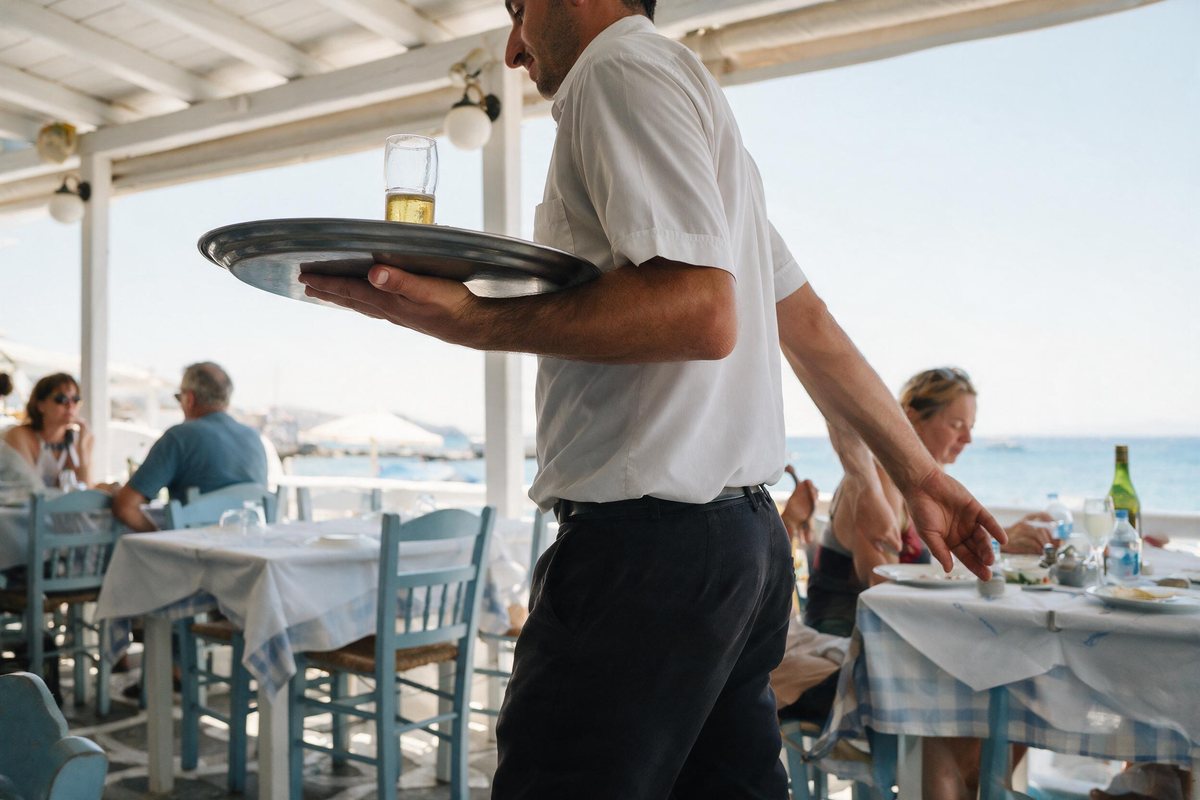
Greece's tourism economy has never been bigger, and its seasonal labour force has rarely been thinner - a squeeze every Aegean hotelier can describe by heart. Meanwhile the state digitised the rulebook: ERGANI declarations, the digital work card, real inspections. The winning employer profile in Greece is specific: paper everything properly, plan the season like a campaign, and put housing at the centre of the offer.
- Greek tourism keeps breaking records while its seasonal workforce shrinks - islands now compete for staff as hard as guests.
- Everything is declared digitally through ERGANI, and the digital work card tracks actual hours in more and more sectors - undeclared work is genuinely risky now.
- The minimum wage has been rising steadily with a governmental trajectory toward 1,000 EUR, paid 14 times a year.
- Housing on the islands is the real hiring constraint - accommodation is the first line of a competitive seasonal offer.
The seasonal squeeze, quantified by experience
The crisis decade pushed a generation of experienced hospitality workers abroad or out of the trade, and record post-2021 seasons have been staffed from a smaller pool bidding against itself. Wages responded - island kitchen pay has risen well above the minimums - but housing costs rose faster where Airbnb ate the worker flats. The employers who staff reliably now do three things: lock in returners with real rehire offers by February, per returning seasonal workers, provide or arrange accommodation and say so in the first line of the ad, and cast wider - mainland Greece, the Balkan neighbourhood, and third-country workers through the seasonal permit routes.

Pay, contracts and the digital rulebook
- Minimum wage: rising steadily with a stated path toward 1,000 EUR monthly, paid 14 times (Christmas, Easter and holiday payments) - quote packages accordingly.
- Declare before day one in ERGANI; schedule changes and overtime are declared too, and the digital work card matches declared to actual hours in covered sectors.
- Seasonal contracts tie to the season and carry traditional rehire priority for returning workers.
- Tips are income and increasingly formalised - card-paid tips flow through payroll; factor them honestly into advertised earnings.
Where do Greek candidates look?
Kariera and Skywalker carry the boards, the public OAED/DYPA channel exists, but Greek frontline hiring runs overwhelmingly on relationships and feeds: Facebook seasonal-work groups are enormous, Instagram carries hospitality brands, and the real conversations happen on Messenger and WhatsApp. The diaspora dimension matters here as in Romania: Greeks abroad considering a season home scroll the same feeds, and an ad that speaks to returners - travel help, housing, a real number - reaches them where no Greek job board can.
The takeaway
Greece rewards the organised: ERGANI-clean paperwork, February campaigns, housing in the headline, returners locked in early and the wider pool - mainland, diaspora, permitted third-country workers - engaged before the panic weeks. The season is not getting less busy, and the pool is not getting deeper; process is the difference between April confidence and June desperation.
Hiring in Greece?
Qwiza runs your campaign in Greek and the languages of the international seasonal pool, screens availability for the whole season, and returns ranked candidates - 48-hour pilot target.
See how Qwiza worksFrequently asked questions
What is ERGANI and what must I file?
ERGANI is the labour ministry's digital platform where employment relationships are declared - hires before the first day, schedules, overtime, terminations. The digital work card extends this to real-time clock-in tracking in a growing list of sectors including much of tourism and retail. The system cross-checks, and inspections on the islands in high season are real. An accountant runs it routinely; the rule that matters is sequence - declare first, work second.
What does seasonal employment look like legally?
Seasonal fixed-term contracts are standard and well-worn in Greek tourism, tied to the operating season of the business. Seasonal hotel workers have traditional rehire rights - a returning worker you employed last season can have priority for this one - which aligns law with what smart employers do anyway: build a returning crew. Unemployment support bridges many seasonal workers through winter, shaping the annual rhythm.
Why can I not find staff when Greek unemployment is still notable?
Three reasons: the workforce that once staffed summers has shrunk through emigration and career changes after the crisis years; island housing costs eat wages that look decent on paper; and the unemployed are disproportionately in Athens and Thessaloniki while the vacancies are on Paros in July. Employers who solve housing, hire in late winter and recruit the returning diaspora fill teams; the rest bid against each other in June.