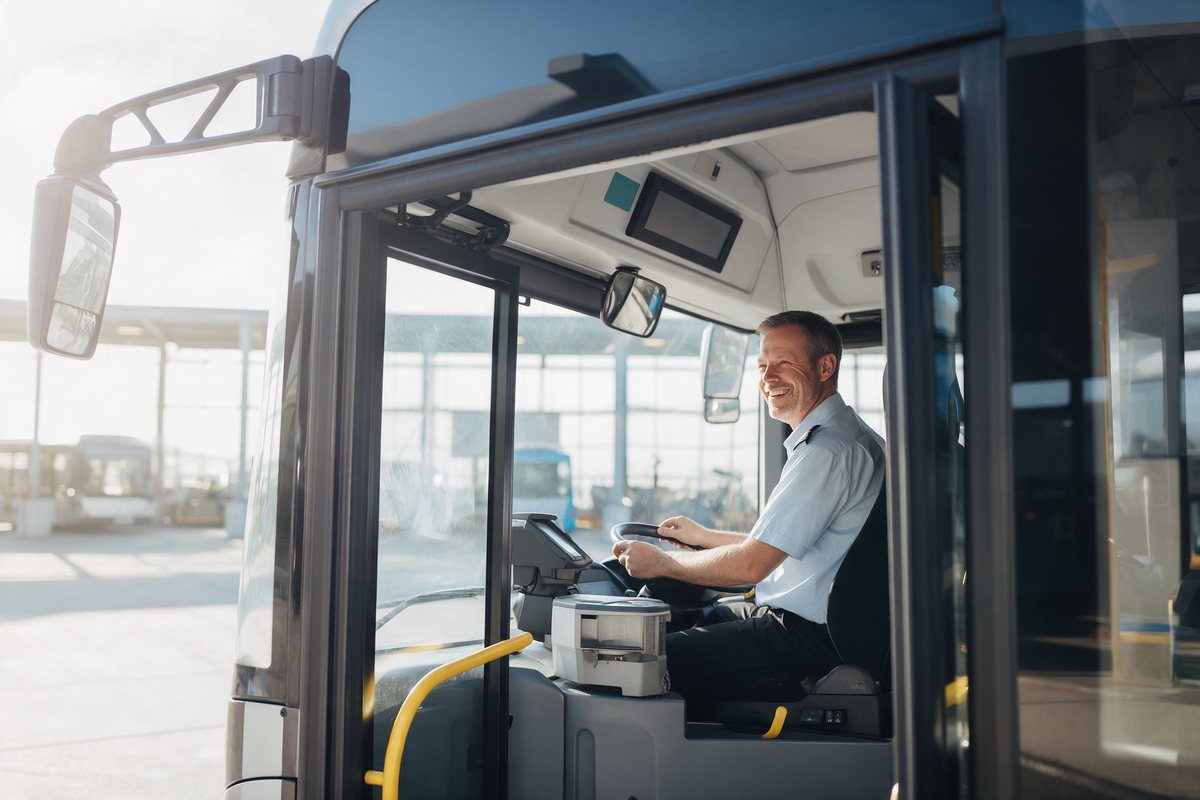
How to hire bus drivers in 2026 comes down to three moves: recruit people who already hold a D licence but drive something else, build a trainee pipeline for the 21-year-olds the new EU rules will eventually let in, and ask the licence questions before you ask for a CV. The pool is thin: IRU's last Europe-wide survey counted around 105,000 unfilled bus and coach driver posts, about 10 per cent of the workforce, a 2023 figure the trade press still quotes (Bus-News, October 2025).
- IRU's last Europe-wide survey counted around 105,000 unfilled bus and coach driver posts, about 10 per cent of the workforce, with fewer than 3 per cent of drivers under 25.
- Directive (EU) 2025/2205 lowers the D-licence age from 24 to 21 with a CPC, but member states have until November 2028 to transpose it, so national law decides this winter.
- Verify five things before anything else: licence category, Driver CPC (Code 95), tachograph card, medical fitness and any background checks your contract requires.
- Employment ads on Meta cannot target by age or gender, so filter with a two-minute quiz on licence, Code 95 and shift availability instead.
How bad is the bus and coach driver shortage right now?
Bad, and getting older. IRU's 2023 survey, still the last Europe-wide count, found around 105,000 unfilled bus and coach driver posts, 10 per cent of the workforce, with fewer than 3 per cent of drivers under 25 and more than 40 per cent over 55. The gap had grown 54 per cent in a year, and IRU forecast 275,000 empty seats by 2028 without action (IRU, October 2023). Nobody has published newer Europe-wide numbers, which is why Sustainable Bus was still quoting the 105,000 in April 2026.
You're also competing with hauliers. IRU's truck report of 30 June 2026 counts around 502,000 unfilled truck driver posts in Europe, a 13 per cent shortage, with roughly 660,500 retirements due by 2030. Anyone with a heavy licence can pick a lorry over your split shift, so the truck driver playbook overlaps with this one. In Croatia, HZZ's January 2026 deficit lists name motor vehicle drivers (Radio Moslavina), though those lists steer school enrolment quotas and scholarships, not work permits.
What is the D-licence gap and will the EU directive close it?
In many European countries you can't hold a category D licence until you're 21 to 24, so a school leaver who wants to drive for a living spends years doing something else first. IRU calls it the school-to-wheel gap (IRU, July 2024), and it's why under-25s are almost absent from the trade.
Directive (EU) 2025/2205, adopted on 22 October 2025 and published in the Official Journal on 5 November 2025, cuts the minimum bus age from 24 to 21 for holders of a certificate of professional competence. It won't help this winter's rota. Member states have until November 2028 to transpose it and the rules apply from November 2029 at the latest (European Parliamentary Research Service, December 2025). Until then national law decides, and some countries already allow D below 24 under professional qualification conditions, so check your licensing authority before you print an age in an ad. The move now is a trainee pipeline, so you're the depot they already know when they qualify.

What must you verify before a driver touches a bus?
Five things, and ask all five before you read anything else about the candidate. Each is a yes or no, which is why a CV is the wrong first document: it hides the answers in prose.
- Licence category: D for full-size buses and coaches, D1 for minibuses. Ask which, and since when.
- Driver CPC (Code 95): current, and when is the next periodic training due?
- Tachograph card: a valid digital driver card in their own name.
- Medical fitness: a current professional-driving medical, checked before the offer.
- Background checks: whatever your school or public-transport contract requires. Start them early; the wait is the killer.
Renewal periods and fees differ by country, so verify them with your national authority, not a blog. The order doesn't change: licence, CPC, card, medical, then routes and pay.
Where do bus drivers actually come from?
Not from the job board. Four pools are worth your time: D holders at another operator, reachable through referrals and the depot gate; truck drivers tired of nights away who can add D with training you part-fund; ex-military and ex-logistics people who already hold a heavy licence and want a local, regular job; and over-50s, the age group that actually drives buses today and the one graduate-style ads quietly filter out. The over-50s playbook covers how to stop doing that.
Non-EU recruitment is a fifth pool, not a quick fix. Croatia's rules from late April 2026 make employers prove accommodation of at least 14 square metres for the first worker and six for each additional one, with rent capped at 30 per cent of net salary (Total Croatia News), and the Foreigners Act passed in May 2026 makes an A1 Croatian test within a year a condition of extending permits (Croatia Week). Hiring from outside the EU is a project measured in months.
How do you reach drivers who never open job boards?
Most people in those pools have a job. They aren't searching, so boards never reach them. They are scrolling Instagram and Facebook on their break, and that's where a short quiz ad earns its keep: it asks the five verification questions plus route and shift availability and one passenger-handling scenario, and the candidate answers in two minutes with no CV and no login. Per-question timing shows who knows the rest-break rules cold and who is looking them up. A human still makes every decision.
One rule you can't bend: employment ads on Meta are a Special Ad Category, so no targeting by age or gender. Write for career switchers in the message and keep the audience broad; Meta's employment ad rules explain why. Qwiza builds the quiz from your job description and books interviews straight into depot managers' Google Calendars.
The numbers below are illustrative, drawn from Qwiza demo campaigns and pilot targets, and the operator is invented. Velebit Coaches runs regional and school routes and needs eight D-licence drivers with current Code 95 before its January timetable starts. Instead of a job-board listing, it turns the job description into a two-minute quiz ad on Facebook and Instagram, with a broad audience and no age or gender targeting.
Over two weeks the quiz asks licence category, Code 95 status, tachograph card, shift and route availability and one passenger-handling scenario. Around 180 people complete it; roughly 40 hold D with a current Code 95, and about 25 of those will take split shifts on local routes. Per-question timing flags a handful who took suspiciously long on the rest-break question, and a recruiter reviews those by hand rather than dropping them.
Interviews are booked straight into two depot managers' calendars. Ten candidates are interviewed in the following week, eight are offered, and the two truck drivers who need the D upgrade start with company-funded training. The point is the funnel shape, not the exact figures: licence and Code 95 answered upfront, humans deciding, and interviews happening within days rather than weeks.
How do you make a depot shift worth switching for?
Put the rota in the ad. Split shifts are why people leave buses for lorries, and hiding them until the interview wastes both sides' week. State the pattern, the guaranteed hours and the pay range, and say whether the routes are local. A driver weighing you against a haulier is trading money for sleeping at home; make the trade explicit.
Pay for training and say so. Funding a C-to-D upgrade or the next Code 95 module costs less than an empty seat, and it's what reliably pulls truck drivers across. Offer a retention bonus after the first year rather than a sign-on bonus on day one, and call promising applicants back the same day, because good drivers go with whoever answers first.
Fill the depot before the rota breaks
Turn your bus driver job description into a two-minute quiz ad on Facebook and Instagram, screen for D licence and Code 95 upfront, and book interviews straight into your depot managers' calendars. First campaign free.
Start a free campaignFrequently asked questions
Can 21-year-olds drive buses now under the new EU directive?
Not yet, unless your national law already allows it. Directive (EU) 2025/2205 was published in the Official Journal on 5 November 2025 and lowers the minimum bus-licence age from 24 to 21 for holders of a certificate of professional competence, but member states have until November 2028 to transpose it and the rules apply from November 2029 at the latest (European Parliamentary Research Service). Some countries already permit D below 24 under professional qualification conditions, so check your licensing authority's current table before you plan around the directive.
What is Code 95 and do I need to check it before hiring?
Code 95 is the mark on a driving licence or driver qualification card showing the holder has a current Driver Certificate of Professional Competence, which professional bus and coach drivers in the EU need on top of the D licence. Check it before the offer, along with the expiry date, because a driver whose periodic training is due soon will need time off and a course before they earn you anything. Renewal periods, course content and fees vary by country, so confirm the current rules with your national authority rather than relying on what the candidate remembers.
Can I target bus driver ads at under-30s on Facebook and Instagram?
No. Employment ads on Meta fall under a Special Ad Category, which removes age and gender targeting and narrows location targeting. That's a compliance rule, not a setting you can work around. What you can do is write the message for career switchers, trainees and people who want local routes instead of nights away, and let a broad audience self-select. A short quiz in the ad does the filtering afterwards, on licence category, Code 95 status and shift availability, so you're not paying to interview people who were never eligible.